
Bigger isn’t always better: The case for North American middle-market infrastructure
As capital crowds into large-cap deals, a more fragmented, underserved segment of North American infrastructure offers something truly different: access, control and the potential to create value.
The investment case for North American infrastructure has rarely been stronger. A structural capacity deficit after decades of underinvestment and demand fueled by megatrends such as rising power demand, energy transition and digitalization have put the asset class on the agenda for institutional investors worldwide.
Yet as the market has grown, capital has concentrated at the top end. The largest managers have raised ever-larger funds, with many leaving the middle market behind.
This has created a deep and diverse opportunity set where competition is thinner and the potential to create real value is substantial. For managers who understand where to look and have the necessary sector expertise and origination platform, this is where some of the most attractive opportunities in North American infrastructure can be found.
North American middle-market opportunities
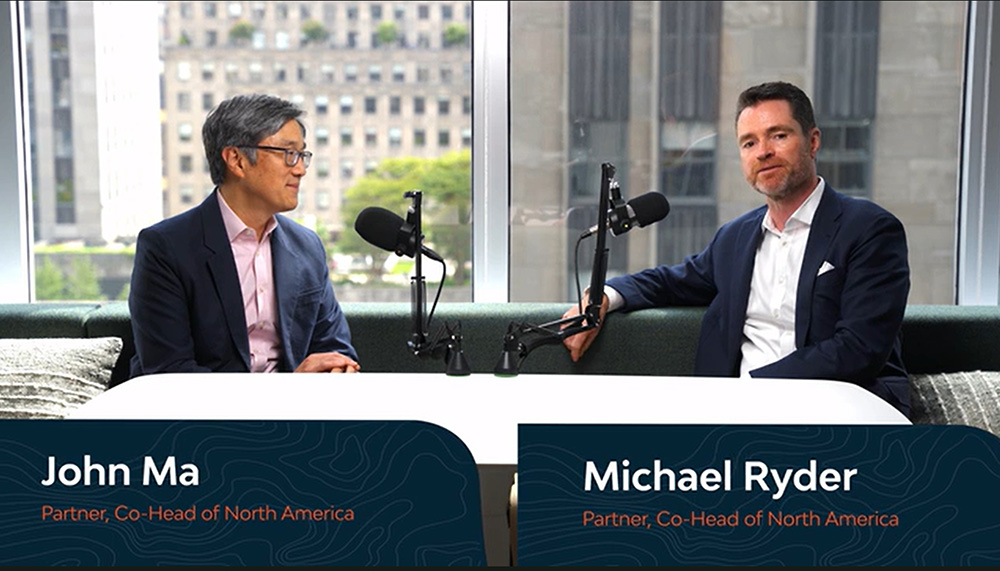
John Ma and Michael Ryder, Co-Heads of North America, discuss opportunities in Middle-Market infrastructure.
Many markets within the national market
Far from being homogenous, North American infrastructure is a collection of highly localized, regional markets.
The US electricity system, for example, is a patchwork of distinct regional markets, each with its own regulatory frameworks, supply dynamics and investment requirements. The same is true across infrastructure sectors such as waste management, digital connectivity, transportation and logistics: regulation frequently sits at the state and local level, customer bases are local and competitive dynamics vary significantly from one region to the next. As a result, a local or regional business can still have a strong “defensive moat” and fulfil a societal need driven by local market dynamics and regulations.
This ecosystem produces a long tail of regional and local businesses that national or global players cannot serve efficiently.
For large-cap managers, deal sizes can be too small to efficiently source and manage. But for a specialist middle-market manager with extensive local networks, they represent a rich source of potential.
United States Data Center Market
Market size in USD billion
Source: Mordor Intelligence.
At a glance
- Capital is concentrating in large-cap deals — leaving the middle market underserved.
- North America is a patchwork of local markets, not one homogenous arena.
- Origination, not auctions, drives access — two-thirds of Igneo deals sourced bilaterally.
- Domestic essentiality offers resilience against tariffs and FX volatility.
To stay updated on our latest events and acquisitions, visit our LinkedIn page.

Structural demand vs cyclical noise
Structural themes are driving sustained capital requirements across the four sectors Igneo focuses on.
The first is the power and energy transition sector. The US has made a significant commitment to decarbonization, with 36 states having implemented Renewable Portfolio Standards and 12 requiring 100% renewable procurement by 2050 or earlier.1 Renewable generation already accounts for approximately 75% of new US power capacity additions,2 with the pipeline of storage, grid-balancing and energy transition assets continuing to grow. What is less appreciated is the urgency: the phase-out of tax equity credits under the current administration is accelerating developer timelines as projects seek to reach completion before incentive windows close.
The second is the digital revolution. Power demand from data centers alone is expected to almost double by 2030,3 driven by cloud adoption, AI model training and the coming needs of AI inference workloads.
Most investor attention has focused on hyperscale facilities – the multi-billion-dollar campuses being built by or on behalf of the largest technology companies for artificial intelligence large language model training, public cloud and related applications that require enormous amounts of computing power. But the shift from large language model training to inference is expected to drive a different kind of demand: dense networks of smaller, localized data centers in urban areas, connected by high-speed fiber, enabling the low-latency response times that AI-powered applications require. Those facilities do not exist in sufficient numbers today and present a major middle-market opportunity.
Estimated global data center capex driven by AI, 2025-2030
($ trillion)
Source: McKinsey & Company, The cost of compute, April 2025
The third is the continuing need to modernize traditional infrastructure. The US has systematically underinvested in infrastructure for decades, and both the current and previous administrations have used policy to push more capital investment into areas such as power, transportation & logistics, and waste & water.
While these themes should provide a durable tailwind for private infrastructure investment, structural demand alone does not make a market attractive. Of equal importance is where investors can access opportunity on favorable terms.
Fewer buyers, more levers
What distinguishes the middle-market for private infrastructure investment is the competitive dynamic and potential for value creation.
At the large-cap end of the market, competition is intense, pricing is efficient and returns and realizations are often dependent on strong, favorable market conditions. Deal count in North American infrastructure fell 24% in 2025 even as average deal size rose 78%, as the biggest managers competed for the same shrinking pool of large-cap and national-champion assets.4
“Deal count in North American infrastructure fell 24% in 2025 even as average deal size rose 78% — the biggest managers competing for the same shrinking pool of large-cap assets.”
In the middle market, there are fewer buyers and less intermediation. Many businesses Igneo looks at have never been owned by institutional capital: they are founder-led or family-owned. While they are generally well run in a local context, few have been fully professionalized, meaning there is significant untapped potential that a skilled institutional owner can help unlock.
There are multiple levers to create value in these businesses. Improving management – recruiting experienced, professional C-suite talent, putting in place the right incentive structures and developing long-term strategic plans – is one lever. Putting capital into assets that have been constrained of investment is another. Operational improvements, from optimizing pricing and revenue, carefully managing expenses, to expanding into adjacent sub-markets, compound over time. And once a business has been professionalized and scaled under institutional ownership, it becomes a more attractive target for a broader pool of buyers, including larger funds and strategic acquirers.
Igneo’s investment in the Michigan-based data center and digital infrastructure business US Signal highlights our approach.
Portfolio asset: US Signal
A founder-led data center business, transformed in two years.
US Signal was a founder-led company, capital-constrained and operating without an experienced management team or formal long-term strategy. Within two years, we had recruited a new C-suite, developed a five-year value creation plan, doubled the number of its data center facilities and tripled total critical power capacity. Average monthly bookings have since grown by approximately 35% compared with pre-acquisition levels.
Access is earned, not assumed
Success in the middle market requires a fundamentally different approach to origination. Waiting for a process to come through an intermediary is, in our experience, often 12 to 24 months too late. By the time a banker is running a process, the competition is intense and the ability to exercise non-price advantages is limited.
Our origination approach often starts with finding the right executive. We identify and partner with experienced sector executives, individuals who have run businesses in our target markets and have deep networks of owner relationships. We lead with those executive partners first and then go looking for the investment, rather than finding an investment and then working out who should run it. This approach consistently generates bilateral transactions: two-thirds of our deals to date have been sourced outside the formal auction process.
The Infinity Aviation investment is a good example.
Portfolio asset: Infinity Aviation
A bilateral roll-up in Tier II and III general aviation markets.
We identified the fixed-base operator (FBO) sector serving the general aviation market as an attractive middle-market opportunity with growing and sticky customer bases, and genuine hangar infrastructure supply constraints. We sourced the initial asset bilaterally through our CEO’s relationship with the sellers.
That first asset, a sole-source FBO in Nashua, New Hampshire, 50 miles from Boston, forms the foundation of a planned roll-up in Tier II and III general aviation markets.
Entry multiples are materially below those available at the large-cap end of the market, and the scope for value creation through institutional management, operational improvements and disciplined capital allocation is substantial.
This kind of origination capability is not easy to replicate. It is the product of years of relationship-building, sector focus and a culture that treats sourcing as a continuous, institutionalized effort rather than episodic.
Resilience when it matters
One question that comes up consistently from investors, particularly those outside the US, is how North American infrastructure performs in more challenging macroeconomic environment. Inflation has proved stickier than expected, and with geopolitical issues putting pressure on energy prices, investors want to know whether the perceived defensive characteristics of the asset class hold up in practice.
The answer, in our experience, is yes, and the post-pandemic period provided a severe, real world stress test. Through the high-inflation environment of 2021 to 2023, middle-market infrastructure assets with genuine essential-service profiles demonstrated strong pricing power and margin resilience.
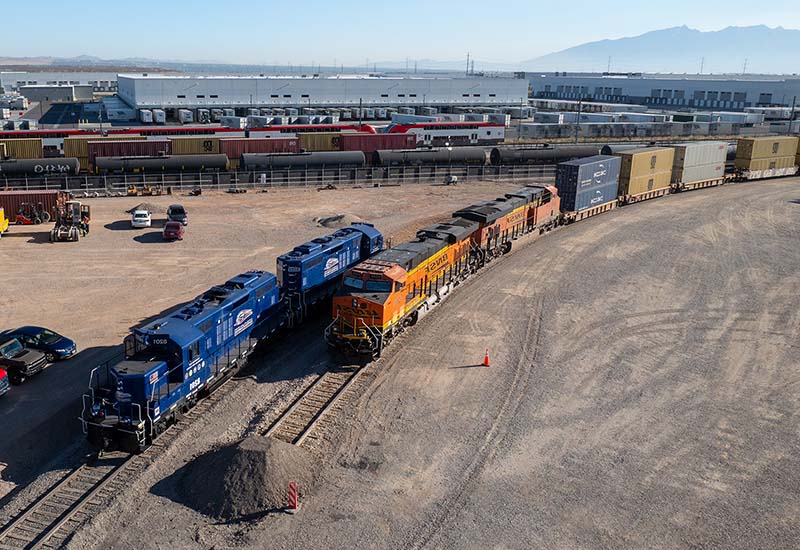
Patriot Rail, our US shortline freight railroad business, is an illustrative case.
Portfolio asset: Patriot Rail
A US short-line freight platform that has scaled through multiple cycles.
Patriot Rail provides freight transportation to primarily domestic industrial shippers – an essential and largely inelastic service – and has demonstrated through multiple cycles that it can pass cost increases through to customers and protect margins.
Under our ownership, the platform has grown from 12 to 31 railroads.
Most infrastructure assets are, by their nature, domestic. Whether a shortline freight network serving US manufacturing, a regional data center operator, or a medical waste business working with local healthcare providers, these businesses typically have little direct exposure to tariffs, global trade flows or foreign exchange volatility. In an environment where internationally exposed assets face higher geopolitical risk, domestic exposures can provide greater resilience.
The platform advantage
The lower middle market in North America is largely covered by a handful of small, independent managers. The absence of established institutional players at this end of the infrastructure funds market is one of the reasons investors find the Igneo proposition compelling.
We bring more than 30 years of mid-market infrastructure investing experience across four regional platforms – Global, Europe, North America and Australia/New Zealand – with over $245 billion in assets under management and a global team of more than 100 professionals. Consequently, our North American strategy is backed by a global network, operational expertise accumulated across decades and multiple market cycles, and the institutional credibility that allows us to attract high-caliber executive partners and management talent.
Our focus is on building a diversified portfolio of core-plus and value-add middle-market investments across energy transition, digital and connectivity, transportation and logistics, and waste and water. As with our investments across the globe, we look to find true infrastructure assets and create value for our investors as those assets grow and mature.
The case for North American middle-market infrastructure is not just a macro story. It is also a structural story about a segment of the world’s largest and deepest infrastructure market that institutional capital has often overlooked. For managers and their investors willing to take an active, relationship-driven approach, the opportunity is not just to access infrastructure but to find real opportunities for value creation.
Sources
1,2. Energy Information Administration, IRA implementation data; Federal Energy Regulatory Commission, Energy Infrastructure Update, December 2022
3,4. McKinsey & Company, Infrastructure: Investing to Support Global Growth, March 2026
5. *Source: First Sentier Group, in USD as at 31 March 2026
Important information
All data sources are independently verified and can be evidenced by Igneo Infrastructure Partners.
This material is for general information purposes only. It does not constitute investment or financial advice and does not take into account any specific investment objectives, financial situation or needs. This is not an offer to provide asset management services, is not a recommendation or an offer or solicitation to buy, hold or sell any security or to execute any agreement for portfolio management or investment advisory services and this material has not been prepared in connection with any such offer. Before making any investment decision you should consider, with the assistance of a financial advisor, your individual investment needs, objectives and financial situation.
We have taken reasonable care to ensure that this material is accurate, current, and complete and fit for its intended purpose and audience as at the date of publication. No assurance is given or liability accepted regarding the accuracy, validity or completeness of this material and we do not undertake to update it in future if circumstances change.
To the extent this material contains any expression of opinion or forward looking statements, such opinions and statements are based on assumptions, matters and sources believed to be true and reliable at the time of publication only. This material reflects the views of the individual writers only. Those views may change, may not prove to be valid and may not reflect the views of everyone at Igneo Infrastructure Partners or First Sentier Group.
About First Sentier Group
References to 'we', 'us' or 'our' are references to Igneo Infrastructure Partners or First Sentier Group (as applicable). First Sentier Group is a global asset management business which is ultimately owned by Mitsubishi UFJ Financial Group. Igneo Infrastructure Partners is an unlisted infrastructure asset management business and is part of the First Sentier Group.
We communicate and conduct business through different legal entities in different locations. This material is communicated in:
Australia and New Zealand by First Sentier Investors (Australia) RE Ltd, authorised and regulated in Australia by the Australian Securities and Investments Commission (AFSL 240550; ABN 13 006 464 428)
European Economic Area by First Sentier Investors (Ireland) Limited, authorised and regulated in Ireland by the Central Bank of Ireland (CBI reg no. C182306; reg office 70 Sir John Rogerson's Quay, Dublin 2, Ireland; reg company no. 629188)
Hong Kong by First Sentier Investors (Hong Kong) Limited and has not been reviewed by the Securities & Futures Commission in Hong Kong. First Sentier Investors and Igneo Infrastructure Partners are business names of First Sentier Investors (Hong Kong) Limited.
Singapore by First Sentier Investors (Singapore) (reg company no. 196900420D) and this advertisement or material has not been reviewed by the Monetary Authority of Singapore. First Sentier Investors (registration number 53236800B) and Igneo Infrastructure Partners (registration number 53447928J) are business divisions of First Sentier Investors (Singapore).
United Kingdom by First Sentier Investors International IM Limited, authorised and regulated by the Financial Conduct Authority (reg. no. SC079063, reg office 23 St Andrew Square, Edinburgh, Scotland, EH2 1BB)
United States by First Sentier Investors (US) LLC, registered with the Securities Exchange Commission (RIA 801#93167)
Other jurisdictions, where this document may lawfully be issued, by First Sentier Investors International IM Limited, authorised and regulated in the UK by the Financial Conduct Authority (FCA ref no. 122512; Registered office: 23 St. Andrew Square, Edinburgh, EH2 1BB; Company no. SC079063).
To the extent permitted by law, MUFG and its subsidiaries are not liable for any loss or damage as a result of reliance on any statement or information contained in this document. Neither MUFG nor any of its subsidiaries guarantee the performance of any investment products referred to in this document or the repayment of capital. Any investments referred to are not deposits or other liabilities of MUFG or its subsidiaries, and are subject to investment risk, including loss of income and capital invested.
© Igneo Infrastructure Partners

An affiliate of First Sentier Group